
The crowded world of social media, where millions post daily, only a few turn likes into lasting legacies. This is the story of a woman who transformed a humble Instagram account into a beauty empire worth millions – a journey fueled by creativity, consistency, and an unshakable belief in her vision.
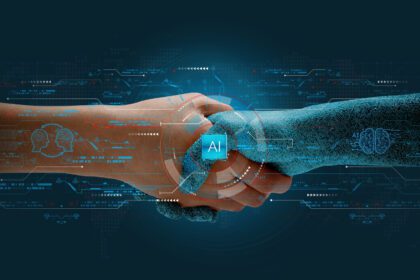
The next decade will be defined by the fusion of three powerful technologies: artificial intelligence, quantum computing, and advanced robotics. Each of these fields is already reshaping global industries, but their convergence promises a transformation on an entirely new scale. Think of it as the digital equivalent of electricity meeting the engine; once these systems interact, exponential breakthroughs become possible.
In this feature, we explore how the merging of AI, quantum capabilities, and robotics will unlock new industrial frontiers, multiply computational power, accelerate automation, and redefine global competitiveness. For entrepreneurs and enterprises alike, understanding this convergence is not just strategic; it is essential for survival in a rapidly shifting technological landscape.

AI as the Cognitive Engine of the Future
Artificial intelligence is rapidly evolving from pattern recognition to autonomous decision-making. According to McKinsey’s 2024 Global AI Index, AI adoption increased by over 30 percent across major industries, illustrating a clear shift toward AI-driven operations. AI functions as the brain within this triad, interpreting data, predicting outcomes, and optimizing processes at unprecedented scale.
Real-world examples already hint at this trajectory. In manufacturing, AI systems analyze machine data to prevent failures before they occur. In logistics, AI routing algorithms can cut operational inefficiencies by nearly 40 percent. As robotics becomes more agile and quantum computing amplifies processing capabilities, AI will transition from an analytical tool to a full-scale strategic decision architect.
Entrepreneurs who build companies with AI at the core stand to benefit disproportionately as automation becomes more nuanced and predictive across global markets.
Quantum Computing: The Power Multiplier
Quantum computing is poised to become the ultimate accelerator for AI. While classical computers process bits in binary form, quantum systems use qubits that can represent multiple states simultaneously. This exponentially increases computational capacity, especially in complex problem-solving.
A 2025 forecast from the Quantum Economic Development Consortium indicates that quantum advantage in optimization and materials science could emerge within five to seven years. In practice, this means AI models could be trained in minutes instead of weeks, unlocking entirely new applications.
Quantum-enhanced AI could analyze supply chain data for a global retailer in real time, simulate molecular interactions for pharmaceutical research, or optimize urban traffic systems with unmatched accuracy. As robotics relies heavily on rapid computation, quantum systems will empower next-generation machines to navigate uncertainty, adapt instantly, and make near-perfect decisions.
Countries investing aggressively in quantum research, including China, the United States, and the UAE, are cultivating strategic advantages that will define the next wave of industrial leadership.
Robotics: From Automation to Autonomy
The robotics industry is shifting from mechanical automation to fully autonomous intelligence. In 2024, the International Federation of Robotics reported a record 553,000 industrial robots deployed worldwide. Yet the next wave of robotics will not merely automate repetitive tasks; it will collaborate, learn, and act with minimal human oversight.
Imagine warehouse robots that self-organize operations, drones that conduct real-time environmental assessments, or surgical robots that adapt to each patient’s anatomy with AI-driven precision. Companies like Boston Dynamics, Fanuc, and Agility Robotics are already aligning robotics development with AI integration, and the results signal a future where machines respond to complex environments with human-like adaptability.
As quantum computing enhances robotic intelligence, machines will handle ambiguity better than ever, performing tasks that currently require human intervention.
Convergence: The New Industrial Catalyst
When AI, quantum computing, and robotics converge, they create a technological flywheel effect. Each technology amplifies the others, producing a combined impact far greater than the sum of its parts.
An AI model supercharged by quantum processing can control a robotic system that responds to live data from sensors, environmental conditions, and real-world constraints. This convergence will reshape major industries by enabling:
- Autonomous factories that optimize production in real time
- Hyper-precise healthcare through quantum-enhanced robotic surgery
- Climate modeling systems that simulate decades of environmental changes in seconds
- Quantum-secured robotic infrastructure for national defense
- Next-generation transportation networks powered by intelligent autonomous machines
This is the foundation of a new industrial revolution, combining cognitive intelligence, computational power, and physical automation.
Case Studies: Convergence in Action
Several pioneering projects already offer a glimpse of this future.
1. BMW’s AI-Fueled Smart Factories
BMW integrates AI-driven robotics in more than 30 locations worldwide. With emerging quantum optimization tools, the company is exploring real-time decision systems for supply chain and manufacturing efficiency, a move that could reduce operational waste across its global footprint.
2. Google’s Quantum-AI Synergy
Google AI researchers have demonstrated that quantum processors can dramatically improve the training of AI models used in robotics experiments. Early findings show faster reinforcement learning in robotic control tasks, pointing toward more adaptive machines.
3. Healthcare Robotics in Japan
Japan’s robotics industry, already the world’s largest, is testing AI-driven robotic systems capable of performing intricate medical tasks. The long-term goal is to incorporate quantum-enhanced imaging and diagnostics, reducing surgical errors and improving recovery outcomes.
Each of these examples highlights the accelerating momentum toward full-scale convergence.
Global Implications and Ethical Considerations
The convergence of AI, quantum, and robotics raises geopolitical, economic, and ethical questions. Nations capable of mastering these technologies will dominate future markets, supply chains, and defense capabilities. This has triggered a new form of technological race, with powerful implications for global leadership.
Ethical governance is equally essential. Quantum-accelerated AI decisions could outpace regulatory systems, while autonomous robots introduce new challenges in accountability and safety. International cooperation must evolve just as quickly as technology to ensure responsible and equitable development.
Conclusion: Preparing for the Converged Future
The fusion of AI, quantum computing, and robotics marks the next great frontier of innovation. For entrepreneurs, investors, and policymakers, the time to prepare is now. The organizations that thrive will be those that integrate AI at the core, invest in quantum readiness, and adopt robotics not only for efficiency but for strategic transformation.
The next decade will not belong to those who follow trends. It will belong to those who anticipate convergence and build boldly into the future it creates.