Creativity has long been portrayed as a mysterious spark available only to a gifted few. Yet modern neuroscience paints a far more democratic and empowering picture. Scientists now understand that creativity is not an accident but the result of coordinated neural systems working together like a high-performance innovation engine. Whether you are an entrepreneur designing a new product, an executive reinventing strategy, or a student solving complex problems, your ability to think creatively depends on specific patterns of brain activity.
Recent advances in brain imaging, particularly fMRI and EEG studies conducted between 2018 and 2024, reveal measurable signatures of creative thought, offering practical insights for leaders and creators across industries. This article explores those neural pathways, shows how they fuel innovation, and outlines how anyone can train their brain to become more creative.\
The Three-Network Model: The Brain’s Creative Architecture
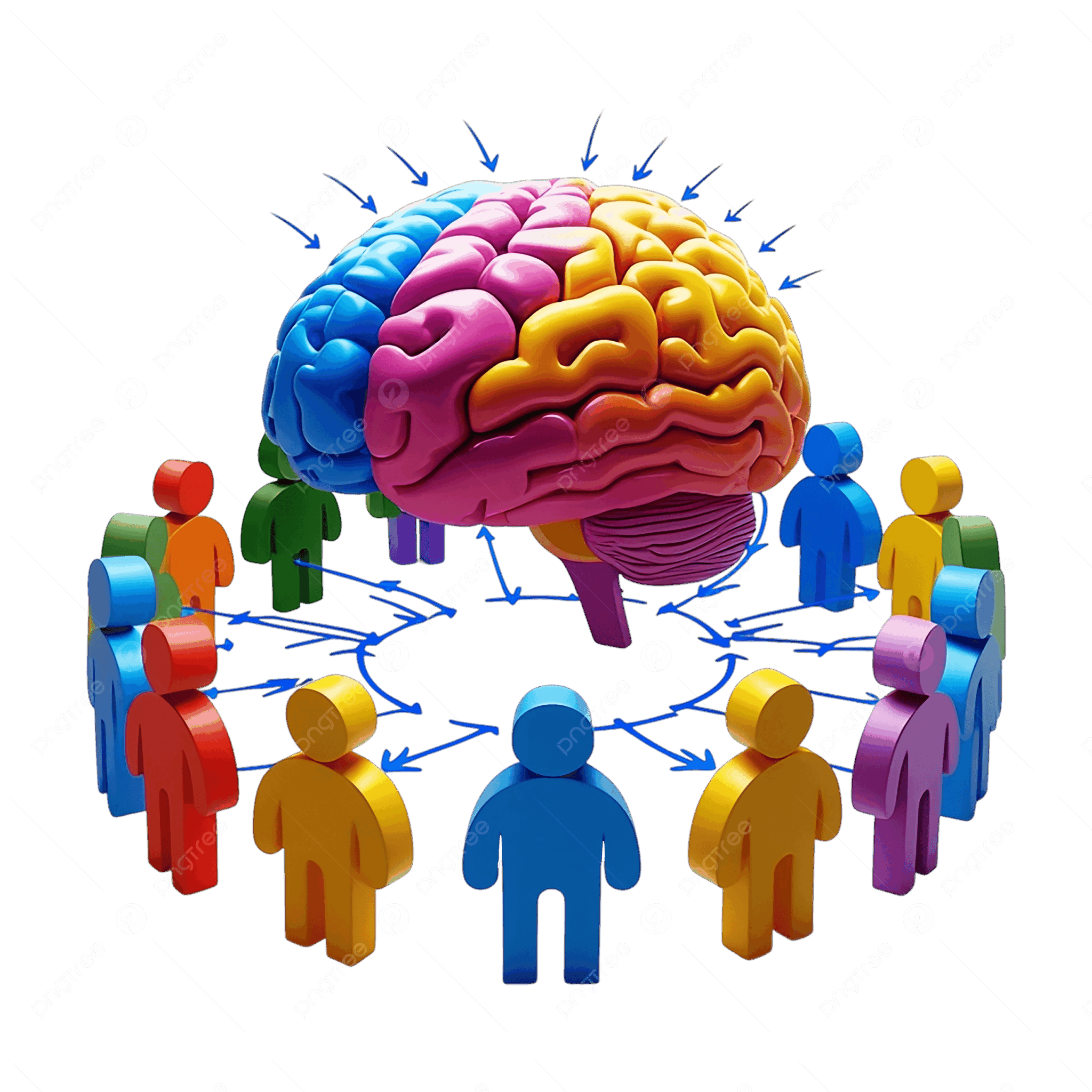
Neuroscientists widely agree that creativity emerges from the dynamic interaction of three major brain networks: the Default Mode Network (DMN), the Executive Control Network (ECN), and the Salience Network (SN).
A 2020 study published by Nature Communications found that high-creativity individuals show stronger connectivity between these networks during ideation.
1. Default Mode Network: The Imagination Hub
The DMN activates when the brain wanders, daydreams, or explores memory. It generates original combinations of ideas, which is essential for divergent thinking.
Case Study: Pixar’s creative teams often schedule unscripted “story walks” to allow the DMN to activate. Many breakthrough concepts emerged during these periods of free association.
2. Executive Control Network: The Editor and Evaluator
While the DMN creates, the ECN evaluates concepts for relevance and feasibility. This network helps transform vague ideas into workable solutions. Leaders rely heavily on this system during strategic planning.
Data point: MIT research found ECN activation spikes when individuals evaluate competing solutions under time pressure, reinforcing its role in filtering ideas.
3. Salience Network: The Switchboard
The SN decides when the brain should shift from imagination to evaluation. It detects which spontaneous ideas deserve attention.
Example: Entrepreneurs often describe “aha moments” that suddenly feel important. Neuroscience shows this emotional significance is triggered by the Salience Network.
How Creativity Forms: From Idea Generation to Insight
Creativity is less like lightning and more like a four-step neurological loop that repeats until breakthrough insight emerges.
Step 1: Exploration
The DMN dives into memory, experiences, and knowledge to generate raw material. This is why creative thinkers often have wide-ranging interests. Broad inputs fuel broader outputs.
Step 2: Association
The brain begins forming connections between unrelated ideas. A study by The University of Toronto revealed creators have stronger associative memory pathways.
Example: Airbnb’s founders connected two unrelated ideas: home sharing and conference overflow housing. This association built a billion-dollar business.
Step 3: Evaluation
The ECN reviews ideas. This is where expertise matters. Experienced professionals filter concepts more efficiently because their ECN is trained by years of pattern recognition.
Step 4: Insight
When networks synchronize, the SN triggers a burst of gamma waves often experienced as the “eureka moment.” Neuroscientists call this phase neural integration.
The Chemistry of Creativity: Neurotransmitters Behind New Ideas
Creativity also relies on brain chemistry. Three neurotransmitters are particularly influential.
Dopamine: The Curiosity Driver
Higher dopamine levels correlate with increased idea generation. Dopamine encourages exploration and risk-taking — both essential components of innovation.
According to research from the University of Oxford, creative individuals have more active dopamine pathways in the prefrontal cortex.
Serotonin: The Mood Regulator
Stable serotonin levels help creators manage stress and persist through periods of uncertainty. Creative work often involves failure; serotonin supports resilience.
Norepinephrine: The Focus Filter
This neurotransmitter helps the brain prioritize valuable stimuli, reinforcing the role of the Salience Network.
Why Some Brains Innovate More Than Others
1. Neuroplasticity
Creativity strengthens with practice because the brain rewires itself. Leaders who embrace continuous learning experience higher creative capacity.
Data insight: A 2022 Harvard study showed adults who learned a new skill for 12 weeks increased DMN connectivity by 18 percent.
2. Domain Expertise
The deeper your knowledge, the richer your creative associations. This is why groundbreaking ideas often come from seasoned professionals, not random inspiration.
3. Psychological Safety
Teams are more creative when the brain does not feel threatened. Fear shuts down the DMN and activates survival circuits instead.
Google’s Project Aristotle famously showed psychological safety is the number one predictor of team innovation.
Training the Brain for Greater Creativity
Practice Divergent Thinking
Engage in exercises like alternate uses tests, free-writing, or brainstorming with constraints. These stimulate the DMN.
Build a “Creative Mix” Input Diet
Expose your brain to diverse topics: art, physics, world cultures, emerging tech. Innovation thrives on variety.
Embrace Rest and Mind Wandering
Neuroscientists emphasize the importance of downtime. Breakthroughs often emerge during showers, walks, or sleep because the DMN is most active at rest.
Adopt a Growth Mindset
Believing that creativity is trainable increases neural plasticity, according to Stanford psychologist Carol Dweck.
Collaborate Across Disciplines
Cross-functional teams create more novel solutions because they mimic the brain’s associative processes externally.
Conclusion: Creativity as a Strategic Advantage
Understanding the brain’s innovation engine offers a competitive edge in a world where automation is accelerating. Creativity is no longer a mystical talent; it is a trainable neurological process. By strengthening the networks and chemical systems behind idea generation, individuals and organizations can build sustained innovation capacity.
Leaders who embrace cognitive science will not only unlock their own creative potential but also build cultures where groundbreaking ideas can flourish. The future belongs to those who understand how their brains work and use that knowledge to shape new realities.