
In today’s digital-finance era, money is no longer just the paper bills or coins in your wallet it is increasingly the data, infrastructure and relationships behind every transaction. Equally, trust is being re-written: not just as faith in banks, but as belief in platforms, code, and access. The founders of fintech firms are at the heart of this transformation. They are not simply launching payment apps or digital wallets they are rebuilding the rails of money and trust for a new generation. In doing so, they are enabling financial inclusion in emerging markets, redesigning the experience of payments and embedding trust by design. This article profiles three compelling founder stories, draws out the strategic dimensions, and offers take-aways for investors, executives and entrepreneurs alike.
Reinventing money infrastructure: Unit (USA)
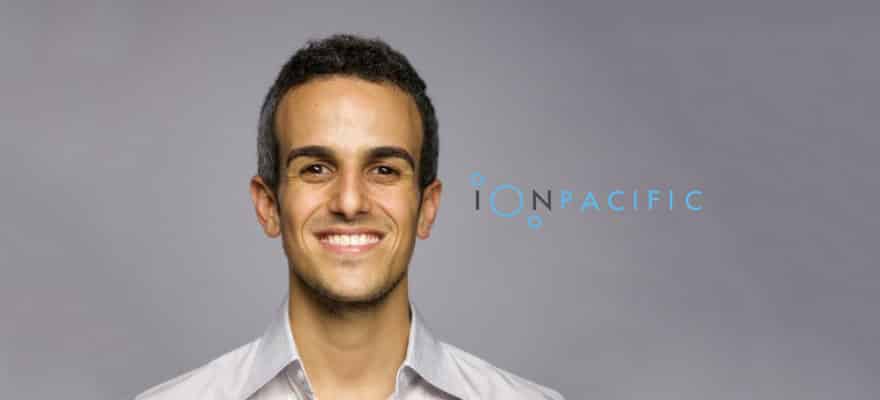
Itai Damti’s company Unit is an exemplar of a fintech founder who chose to rebuild the infrastructure of money itself accounts, cards, ledgers, payments rails rather than simply layer an app on top. In a recent interview, Damti said:
“When we started Unit … we were complete outsiders to the complexity of building accounts, cards, money-movement or lending in the US. That ‘industry ignorance’ allowed us to think about our product from first principles, not within old boxes or definitions.” Flagship Advisory Partners
Key moves
- Unit built a platform to support bank partners and tech companies in launching full fintech programs: identity, security, payments, card issuing, reconciliation, fraud.
- The ambition: make the plumbing of finance as programmable and partnerable as the cloud.
- By focusing deeply on the rails, the notion of money is transformed (not just paying). The concept of “trust” shifts: the trust is in the platform’s rules, certification with regulators, and embedded compliance rather than simply legacy bank name recognition.
Why it matters
- Traditional finance infrastructure often sits in the “back office”. Fintech founders like Damti bring that into the foreground, which means money becomes more modular, white-labelable, and programmable.
- Trust becomes a function of system design and certification (e.g., connecting to the Fed, card networks) rather than legacy brand alone.
- For global companies including in regions like the Middle East and Africa this kind of infrastructure flexibility lowers the barrier to launching financial products locally.
Data point
- In the interview, Damti acknowledged their system was certified to interface with the Federal Reserve and card networks on behalf of six bank customers.
Take-away for entrepreneurs/investors
- If you aim to redefine money, consider infrastructure and rails, not just frontend apps.
- Trust is baked in through certification, legal/compliance frameworks, and early-mover advantage on regulatory connectivity.
- That means founders with cross-disciplinary backgrounds (tech + compliance + regulation) may perform better.
Financial inclusion at scale: DANA Indonesia
In Southeast Asia, the question of money and trust takes on a different dimension: bridging the under-banked, shifting from cash to digital, and building user trust in previously informal systems. Vince Iswara’s DANA in Indonesia is a case in point.

Background
- DANA was founded to solve Indonesia’s core barrier: accessibility and trust in financial services.
- It provides a digital wallet and payments service that has scaled to over 180 million users.
Key trust lessons
- Iswara identifies three guiding principles: trusted, user-friendly, accessible. The first trusted is paramount. He said: “On the first principle, namely being trusted, we continue to strive to build user trust by providing the best security technology.”
- The macro context: In many markets, cash dominates, which has high costs (for distribution, risk, fraud) and low traceability. Iswara noted cash distribution in Indonesia costs roughly Rp 3.7 trillion per year.
Impact on money notion
- Money in this context becomes digital value stored in a wallet accessible via smartphone; the idea of trust shifts: users trust the platform rather than simply the bank branch they know.
- DANA’s scale (180 m+ users) means trust must scale too via technology (KYC, security), regulatory alignment, and usability.
- Further: DANA is using AI agents to become data-driven and build trust via reliability.
Why global audiences should watch
- Emerging economies show how fintech can redefine money for billions who are not “served” by traditional banks.
- The layered trust model (technology + accessibility + brand) offers a blueprint for other regions including the Middle East, Africa.
- This demonstrates that “money” is not just storing value but enabling behaviour, inclusion, and access.
Trust as Competitive Asset: The Broader Trend
Although not tied to a single founder profile, a third theme emerges across fintech: the transformation of trust itself.
Evidence
- A recent academic article argues: “In FinTech, trust cannot be ensured by regulatory and institutional structures as trust is ensured in traditional banking; digital financial platforms have to ensure trust mainly by technological reliability, ethical governance, and user-centric design.”
- Another piece frames trust as the “biggest growth lever” for fintech: “Trust is becoming fintech’s biggest growth lever … Data access must be user-permissioned from day one.”
What this means
- In the fintech era, money is digital, networked, and global. Traditional trust-markers (physical branches, historic bank brands) matter less.
- Founders must build trust from the ground up: security, transparency, permissioned data, auditability.
- Infrastructure founders (like Unit) and inclusion founders (like DANA) are embedding trust as part of the core offering, not an add-on.
Real-world relevance
- In markets with weak financial systems or high cash use, building trust is as important if not more as building the payment product.
- In regulated markets, trust shifts to how fintechs partner with banks, integrate with central banks, or build certified rails.
- For global business and investors, this means evaluating fintech founders not just on growth metrics, but on how they build trust frameworks and infrastructure for money.
Conclusion – Actionable Takeaways & Outlook
Key take-aways
- Money is being re-engineered: Founders are re-imagining money not just as value storage, but as programmable, accessible flow.
- Trust is now architectural: It is embedded via infrastructure, platform design, regulatory pathways, data governance not just logos or marketing.
- Inclusion drives scale: Geographic and demographic markets with lower legacy banking penetration offer fertile ground for redefining money/trust.
- Infra + usability = competitive edge: As seen in Unit and DANA, success comes from marrying deep infrastructure (rails, compliance) with user-friendly experience.
- Evaluate founders on trust design: For investors and corporate partners, assess how the founder builds trust via tech, governance, partnerships not just how fast they grow.
Outlook
- In the next 3-5 years we will see money systems become increasingly modular, globalised, and embedded (in apps, devices, ecosystems). That means trust frameworks will be more decentralised with fintechs, banks, regulators and platforms cooperating.
- Emerging markets will continue to lead in redefining money/trust because the leap from cash to digital is more dramatic and the opportunity to build trust afresh is greater.
- The biggest battles ahead will be around data governance, cross-border flows, identity, stablecoins and regulatory regimes. Founders who anticipate how trust must scale across borders will win.
In sum, as entrepreneurs and investors seek the next wave of fintech, ask yourself not just “How big can this payment market get?” but “How is trust built into the model from day one?” Because in the world of digital money, trust compounds faster than money.