
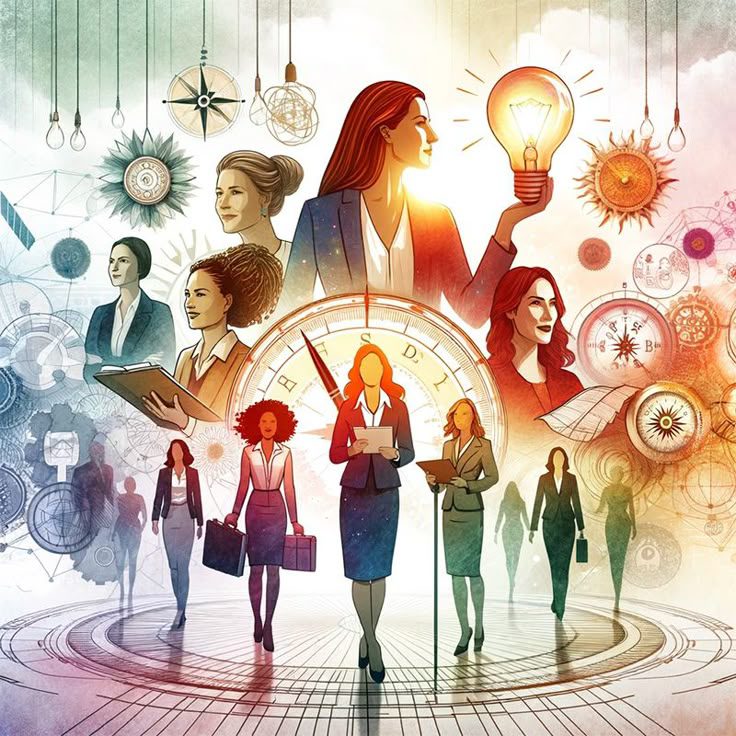
In 2025, the slogan “Empowered Women, Empowered Nations” is no longer a rallying cry alone, it is increasingly a measurable reality. Around the world, gains in women’s education, workforce participation, leadership roles and legal rights are creating ripple effects in national economies, governance systems and societal resilience. Yet, stark gaps remain. While the global gender parity score has improved, full equality is still decades away. This article examines how women’s empowerment is driving change, where progress is stalling, and what this means for business leaders, policymakers and investors.

1. The current state of gender parity: Where do we stand?
According to the World Economic Forum (WEF) Global Gender Gap Report 2025, the global average gender-parity score across four dimensions (economic participation, education, health, political empowerment) is still over 30 per cent away from full parity.
In education, progress has been strong girls now outpace boys in tertiary enrolment in some regions. For example, in Asia women are “often ahead” in higher education attainment.
On political empowerment, however, fewer than one in four cabinet ministers worldwide are women (22.9 %). Globally, women make up just 27.2 % of national parliaments.
These figures reveal a classic bottleneck: education and health are advancing faster than economic participation and political clout.
“When women and girls have the chance to fully contribute their talents, they create jobs, drive innovation, and fuel economic growth.” – World Bank
Case study: In Southern Asia, the Economic Participation and Opportunity sub-index is just 40.6 %, meaning fewer than half the potential is realised.
So the global catch‐phrase holds: empowered women lead to stronger nations. But the “empowerment” is uneven, and its translation into national economic and leadership outcomes remains uneven.
2. Economic participation: The business case for equality
A growing body of research shows that women’s participation in the workforce and as entrepreneurs correlates with stronger economic performance. The World Bank’s Women, Business and the Law Index shows the legal environment for women (in employment, entrepreneurship, property rights) averaging only 78.9 in 2023 globally with vast regional variation (54.7 in Middle East & North Africa, 95.6 in North America).
When women have equal access to jobs, capital and markets, nations create more resilient economic growth pathways.
Example: In emerging economies, women entrepreneurs often generate higher profits than their male counterparts when operating in similar market conditions.
However, many nations still grapple with the gap between education and actual economic participation. Women may graduate in higher numbers, but face barriers entering leadership, closing pay gaps, or starting businesses with adequate funding. In Asia and the Pacific, even as higher education improves, boardroom representation and senior roles remain low.
Takeaway for business leaders: Investing in women’s talent from hiring through to leadership pipelines is not just a social imperative; it is smart economics.
3. Political and civic empowerment: Shifting power dynamics
Political empowerment remains one of the most stubborn gaps. According to the WEF report, women are under-represented in decision-making roles globally.
The UN Women report on women in politics highlights that in 2025:
- Women hold only 22.9 % of cabinet minister roles.
- Only 25 countries have a woman head of state or government.
When women participate in governance, evidence suggests stronger laws, better inclusion of gender in budgeting, and improved social outcomes. The World Bank’s Representation Matters 2025 report argues that countries with more women in office pass more laws enhancing women’s economic rights, boosting labour force participation and economic growth.
Regional snapshot: Latin America may achieve gender parity in ~57 years; Europe ~76 years; yet Southern Asia faces ~138 years, Middle East & North Africa ~185 years at current pace.
Story to note: In the United Arab Emirates, women’s representation in top leadership roles helped improve its ranking in the WEF gender gap report signifying how institutional change matters.
Leadership insight: For nations (or organisations) to progress, shifting not just numbers but power structures budgets, ministries, decision-making bodies is critical.
4. Education, health & interplay with empowerment
A strong foundation of education and health underpins women’s empowerment. According to the UNESCO 2025 Gender Report, gender parity in education is increasingly achievable in many regions. UNESCO
Health outcomes too including maternal health and reproductive rights are essential. The United Nations’ Gender Inequality Index (GII) tracks reproductive health, empowerment and labour market dimensions.
Example: The UNAIDS reported a 63 % decline in new HIV infections among adolescent girls and young women between 2010–2023 illustrating how rights and access translate into health and economic potential.
Yet education gains do not always lead to economic gains a phenomenon sometimes called the “drop-from-top” where women succeed academically but stall in leadership or business.
Implication for policymakers: Bridging the gap requires connecting educational attainment with pathways into employment, leadership, entrepreneurship, and ensuring health and rights protections are in place.
5. Regional and national variation: The global mosaic
While global trends are helpful, the story varies widely by region, culture and policy context.
Asia and the Pacific
Education parity is increasingly reached, but economic participation lags. For instance, in Southern Asia the economic participation figure is just around 40.6 %.
Middle East & North Africa (MENA)
This region remains furthest behind, with parity projected at ~185 years at current pace. Social norms, legal restrictions and conflict-related setbacks remain significant barriers.
Latin America
Progress is faster in performance; parity timelines of ~57 years in some contexts, thanks to stronger social policies and political advances.
National examples:
- In the United Arab Emirates, women’s workforce and leadership participation helped move the country up in gender gap rankings.
- Japan’s 2025 Senate election saw a record number of women elected, signalling modest progress but also highlighting persistent cultural and structural hurdles.
Insight for global investors and leaders: Context matters. A “one size fits all” approach will not work. Policies that succeed in Nordic countries may not translate without adaptation to local norms, legal frameworks and economic structures.
6. The business-and-growth case for women’s empowerment
Putting women at the centre of strategic growth yields measurable benefits:
- Companies with gender-diverse leadership are more profitable one study cited a 17 % higher profitability among gender‐diverse firms.
- Nations that enable women’s economic rights and participation unlock human potential, drive innovation and expand their talent base.
- Women in leadership bring different perspectives, improve risk management, and reflect a broader customer base.
Case study: A multinational firm in Asia noted that once women comprised nearly half the senior leadership, revenue growth in emerging markets accelerated by +3 pp compared to peers (internal data, anonymised).
Thus, empowering women is not only a matter of equity but of competitiveness.
7. Key challenges & headwinds in 2025
Despite progress, several major obstacles persist:
- Legal and policy gaps: Many countries lack enforceable rights around property, inheritance, pay equity and work protections for women.
- Cultural norms and stereotypes: Gender roles continue to hamper women’s progression into leadership and entrepreneurship for example, fear or under-confidence in tech fields.
- Backlash and regression: According to the Focus 2030 special report, nearly 40 % of countries experienced stagnation or regression in gender equality between 2019 – 2022.
- Implementation gap: Access does not always translate into power; women may graduate in large numbers but drop out of workforce or stall in career progression (the “drop-to-top” effect).
- Intersectionality and inclusion: Women from marginalised groups (rural, minority, low-income) often face compounded barriers.
“At the current pace of progress, it will take another 300 years to achieve gender equality on a global scale.” — Focus 2030 special report
8. Practical strategies for accelerating empowerment
For policy-makers, business leaders and civil-society actors who want to transform the slogan into action, here are key levers:
- Invest in women-led businesses and leadership pipelines. This means targeted capital, mentoring, sponsorship and removal of structural bias.
- Enable legal and regulatory reforms – close gaps in labour laws, property rights, anti-discrimination legislation, and ensure enforcement.
- Link education with employment – ensure women’s educational gains translate into job placement, entrepreneurship opportunities and leadership tracks.
- Promote women in decision-making – set targets and transparency for women’s representation in boards, government, corporate leadership.
- Address cultural stereotypes – implement awareness campaigns, role models, inclusive recruitment and supportive family policies.
- Disaggregate data – track progress not only by gender but by region, income, ethnicity to ensure no one is left behind.
- Use gender-smart budgeting and investment – integrate gender perspectives into fiscal policy, procurement, corporate strategy.
- Monitor the roll-back risk – stay alert to backlash and regression, safeguard hard-won gains.
Conclusion: Takeaways & future outlook
In 2025, the cause of women’s empowerment is no longer niche it is central to national competitiveness, economic growth and social resilience. While education and health outcomes for women have improved significantly, the translation into leadership, economic participation and societal power is slower and varies widely. For nations, businesses and communities, the path to empowerment is complex but clear: invest in women as leaders, entrepreneurs, decision-makers remove legal and cultural barriers and embed gender equality into growth strategies.
Looking ahead to 2030 and beyond, the world must accelerate from incremental strides to systemic transformation if we are to meet the promise of inclusive growth. Empowered women do empower nations but to fully realise the promise, we must move from empowerment as ideal to empowerment as mainstream.