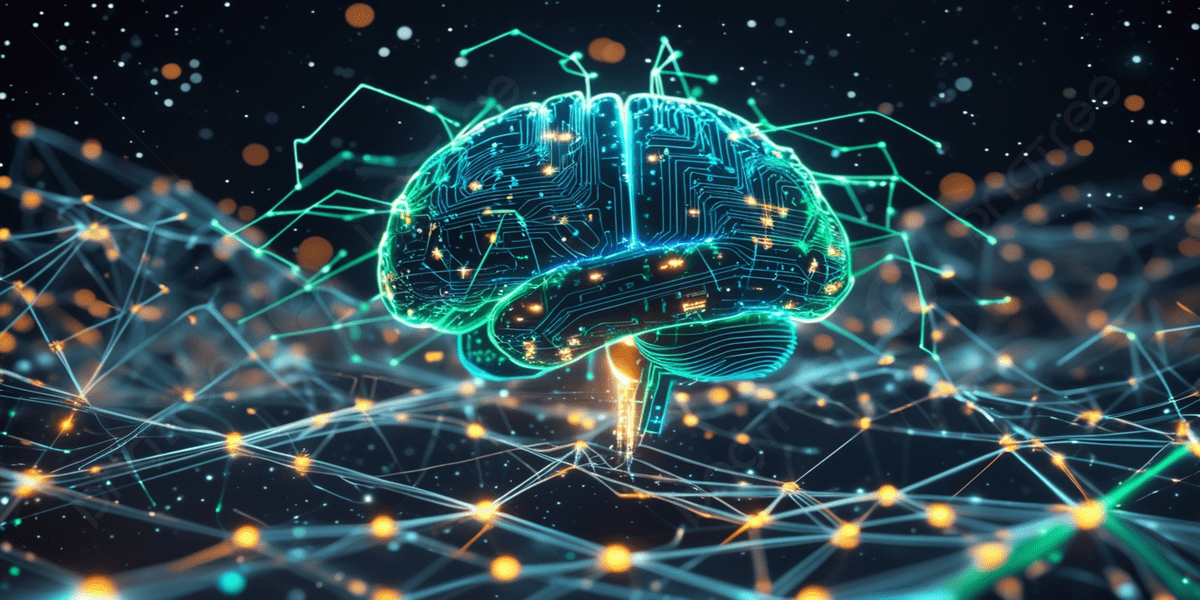
Creativity is often described as humanity’s final frontier, the one trait machines could never replicate. Yet generative AI systems now design logos, compose symphonies, craft business strategies, and even win art competitions. This sudden leap forces a timely question: Can AI truly be creative, or is it simply mimicking patterns at scale?
Neuroscience provides an unexpected lens for this debate. Over the past decade, research on the human brain has revealed that creativity is not a mystical spark but a measurable cognitive process involving pattern recognition, memory recombination, and divergent thinking. As it turns out, these are the very capabilities emerging in modern AI systems.
This article unpacks what neuroscience says about human creativity, how AI models measure up, and what this means for entrepreneurs, innovators, and global industries navigating the next wave of machine-driven ideation.
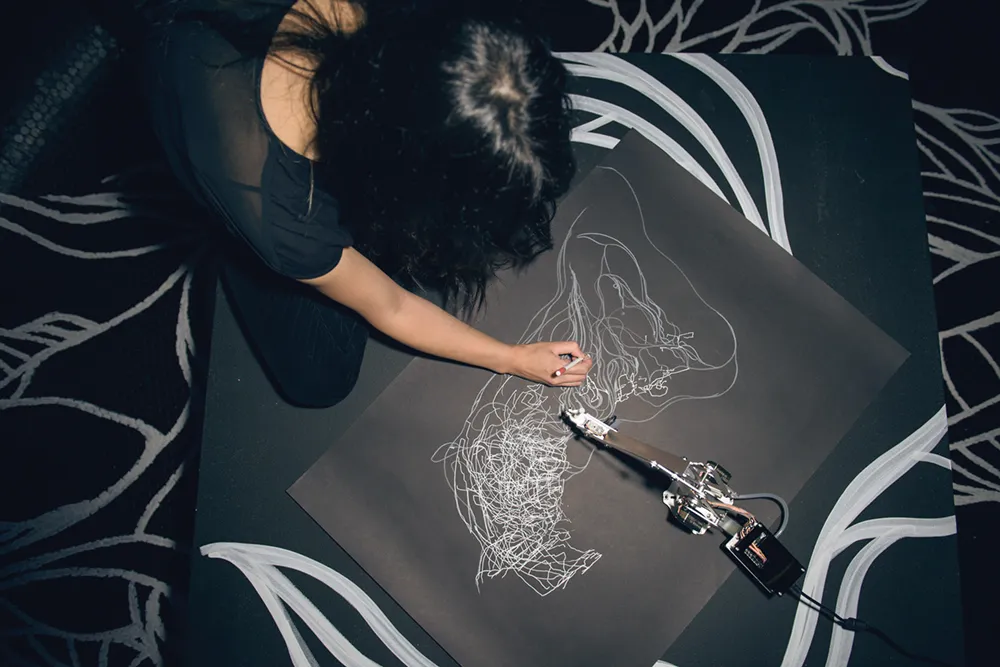
How Neuroscience Defines Human Creativity
Neuroscientists typically break creativity into three components: novelty, usefulness, and surprise. This framework is widely referenced in cognitive science and aligns with research from institutions like the University of Cambridge and MIT.
1. The Brain’s Dual-Network Model
Modern neuroscience highlights two major systems behind creativity:
- Default Mode Network (DMN): Generates ideas, mind-wandering, imaginative thinking
- Executive Control Network (ECN): Evaluates ideas, filters, and shapes them into viable concepts
- Salience Network acts as the switching mechanism between both
A 2022 fMRI study published in Nature Communications showed that highly creative individuals activate both networks more fluidly than others when solving open-ended problems.
In simple terms, creativity happens when the brain toggles smoothly between free exploration and critical editing.
2. Memory Recombination as a Core Function
Contrary to popular belief, creativity is less about creating something from nothing and more about recombining stored memories in novel ways. Neuroscientist Dr. Anna Abraham notes that the brain’s associative processes allow us to connect ideas across distant concepts, producing fresh insights.
Where AI Fits
Generative AI models mimic this memory recombination process by transforming massive datasets into multi-dimensional probability spaces. They don’t remember in a human sense, but they do combine patterns to generate outputs that feel new.
This is the first fundamental overlap between biological and artificial creativity.
How AI Generates “Creativity”: A Technical but Simple Explanation
When an AI model produces an original design, strategy, or concept, it’s not channeling imagination. Instead, it performs a sophisticated form of pattern extrapolation.
1. AI Uses Statistical Creativity
AI creativity emerges from:
- Pattern recognition
- Probabilistic prediction
- Generative modeling
- Reinforcement fine-tuning
- Optimization loops
These methods allow AI to output novel combinations that can be surprising, useful, and relevant the same three pillars neuroscientists use to define human creativity.
2. Divergent Output at Scale
The human brain can explore a handful of creative permutations at once. Large AI models can explore billions.
This creates what Stanford’s Human-Centered AI Institute calls “expansive ideation,” enabling machines to generate options no human could realistically conceive in the same timeframe.
Where AI Falls Short
Yet, AI still lacks:
- Embodied experience
- Emotional context
- Self-awareness
- Internal motivations
- A sense of meaning or consequence
These absences matter because they shape the depth and intention behind human creativity.
Where Human Creativity Still Reigns Supreme
Even as AI surpasses humans in speed, scale, and pattern generation, humans remain uniquely positioned in several areas.
1. Emotional Intelligence and Lived Experience
Creativity is rooted in emotion, cultural context, and subjective meaning. AI cannot experience grief, joy, nostalgia, or fear the emotional drivers behind many breakthroughs in art, innovation, and storytelling.
A 2023 Harvard study emphasized that emotional salience heavily influences creative decision-making, something machines cannot replicate authentically.
2. Purpose-Driven Ideation
Humans innovate to solve problems, express identity, or push boundaries. AI innovates because it is instructed to.
The intention behind the idea often shapes its originality more than the idea itself.
3. Ethical and Value-Based Judgment
Humans integrate moral, social, and long-term consequences into their creative choices aspects not inherently accessible to AI without external guardrails.
Where AI Outperforms Humans in Creative Tasks
Despite lacking emotional depth, AI offers unprecedented creative advantages.
1. Infinite Iteration
AI can generate thousands of variations in seconds a game-changer for product design, marketing, architecture, and R&D.
This gives businesses the ability to prototype creativity before committing resources.
2. Boundary-Free Thinking
AI models don’t suffer from cognitive bias, fatigue, or social inhibition. They explore creative directions humans typically filter out.
This is particularly transformative in pharmaceuticals, where models like DeepMind’s AlphaFold rapidly generate structural predictions that accelerate drug discovery.
3. Creativity Under Constraints
AI thrives when operating within strict parameters, such as:
- Budget limits
- Technical specs
- Market data
- Compliance rules
Human creativity tends to resist constraints; AI creativity thrives within them.
The Future: Hybrid Creativity Between Humans and AI
The most powerful creative breakthroughs in the next decade won’t come from humans or machines alone but from human-machine co-creativity.
1. Humans Provide Vision; AI Provides Volume
A product designer might provide a concept sketch, and AI generates 300 possible iterations. The final choice remains guided by human taste, culture, and strategy.
2. AI as a Creative Amplifier
In journalism, AI identifies emerging trends while writers inject nuance and real-world perspective. In entrepreneurship, AI models run simulations while founders decide which risks are worth taking.
3. Neuroscience Suggests Collaboration Is Natural
Since creativity depends heavily on combining diverse mental models, AI essentially acts as an external cognitive network giving humans more raw material to ideate from.
Conclusion: So Can AI Be Creative?
Neuroscience suggests that creativity is fundamentally about novel recombination, and on that basis, AI absolutely demonstrates creative capacity. But human creativity remains richer, more intentional, and more emotionally grounded in ways machines cannot experience.
In practice, the question is no longer whether AI is creative but how humans can harness AI-generated creativity responsibly and competitively. The next decade will reward leaders who understand this duality: AI expands possibility, while humans provide meaning.