Early confidence is loud.It sounds like conviction, certainty, and bold statements about the future. Founders speak in absolutes. The vision is clear. The path feels obvious. Doubt exists, but it is drowned out by momentum and belief.
Then something changes.
The confidence that once came easily begins to fracture. Not all at once, but gradually. Questions replace certainty. Trade-offs replace clarity. Decisions feel heavier because consequences are now real.
Many founders interpret this moment as losing confidence. In reality, it is a shift. And it happens to almost everyone who builds something real.
Phase One: Borrowed Confidence

In the beginning, confidence is borrowed.
It comes from excitement, validation, and possibility. Friends are supportive. Early users are enthusiastic. The problem feels solvable because you have not yet met its full complexity.
This phase is necessary.
Borrowed confidence gets things started. It allows founders to take risks they might otherwise overthink. It fuels momentum when evidence is thin and outcomes are uncertain.
But this confidence is fragile. It relies on belief more than proof.
Phase Two: The Collision With Reality

The shift begins when responsibility deepens.
Customers depend on you. Employees look to you. Cash flow matters. Decisions compound. Mistakes stop being theoretical and start becoming expensive.
This is where confidence often feels like it is shrinking.
Founders realize they do not have all the answers. The market behaves unpredictably. Strategies that worked once stop working. Success feels less controllable than expected.
Psychologically, this is unsettling. The old confidence was built on optimism. The new reality demands judgment.
Many founders mistake this discomfort for failure. It is not.
Phase Three: Quiet Self-Doubt

This phase is rarely discussed publicly.
The founder still functions. The company still moves forward. But internally, confidence becomes quieter and more conditional. Decisions are slower. Certainty disappears.
You stop saying “this will work” and start saying “this might work if.”
This is not weakness. It is calibration.
According to a 2023 report on founder psychology, experienced founders consistently rated their confidence lower than first-time founders, while making better decisions overall. Confidence did not vanish. It matured.
Phase Four: Earned Confidence Replaces Belief

Eventually, something stabilizes.
Confidence returns, but it feels different. It is no longer loud. It does not need to be shared. It is built on pattern recognition instead of hope.
You have seen things break and recover. You have made wrong calls and survived. You trust your ability to adapt more than your ability to predict.
This is earned confidence.
It shows up as calm in uncertainty. Willingness to say “I don’t know yet.” Comfort with delayed answers. Less attachment to being right and more commitment to being effective.
This confidence is harder to shake because it is grounded in experience.
Why This Shift Is So Disorienting
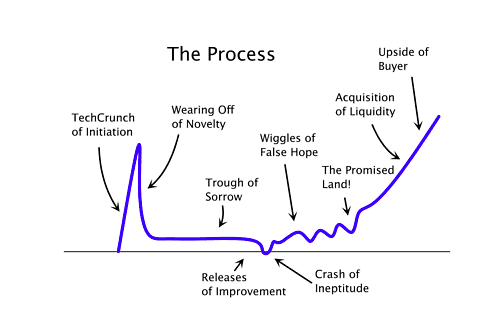
The hardest part of the confidence shift is identity.
Early confidence feels like progress. Losing it feels like regression, even when skill is increasing. Founders often assume they should feel more confident as they gain experience. The opposite is often true.
Awareness grows faster than certainty.
As your understanding deepens, you see more variables, more risks, more second-order effects. Confidence becomes conditional because reality is conditional.
The mistake is believing confidence should feel the same at every stage.
The Founders Who Struggle Most With This Shift
The founders who struggle are not the least capable.They are often the ones most attached to their early identity. The visionary. The decisive leader. The person with answers.
When confidence changes shape, they resist it. They overcompensate with bravado or retreat into indecision.
The founders who grow are the ones who allow confidence to quiet without interpreting it as failure.
What the Shift Changes About Leadership
After the shift, leadership becomes less performative.You listen more. You test assumptions. You create systems instead of relying on instinct alone. You ask better questions instead of delivering confident answers.
Teams often feel safer during this phase, even if the founder feels less sure internally. Psychological safety improves when leaders are honest about uncertainty.
Ironically, this makes organizations stronger.
How Founders Can Move Through the Shift Without Breaking
The shift cannot be avoided, but it can be navigated.
Helpful reframes:
- Confidence is not certainty. It is adaptability.
- Feeling unsure often means you see the problem clearly.
- Quiet confidence is more useful than loud conviction.
- You are not losing belief. You are gaining judgment.
Founders who normalize this shift recover faster and lead better.
Conclusion: Confidence That Lasts Looks Different
Every founder goes through a confidence shift.The ones who succeed are not the ones who cling to early certainty. They are the ones who allow confidence to evolve from belief into capability.
Early confidence gets you started.
Earned confidence keeps you going.
If your confidence feels different than it used to, that may not be a warning sign. It may be evidence that you are finally building something real.