

Hybrid work is no longer a transition. It is the global operating system for modern companies. As organizations move deeper into 2026, a new collaboration mindset is emerging, reshaping how teams communicate, innovate, and scale across geographies and time zones. This shift is not powered solely by technology. It is driven by a redefinition of trust, transparency, and team dynamics as workers demand autonomy while leaders pursue efficiency.
From AI-enhanced workflows to redesigned office rituals, global teams are quietly rewriting the rulebook of communication. A Gartner survey from late 2025 revealed that 71 percent of hybrid organizations plan to restructure internal communication strategies by 2027 to reduce friction and increase clarity. The companies winning early are those that view collaboration not as a process but as a mindset: adaptive, inclusive, and digitally fluent.
This article explores how this collaboration mindset is reshaping hybrid work, the tools and cultural shifts enabling it, and what leaders must do to build high-performing teams across borders.
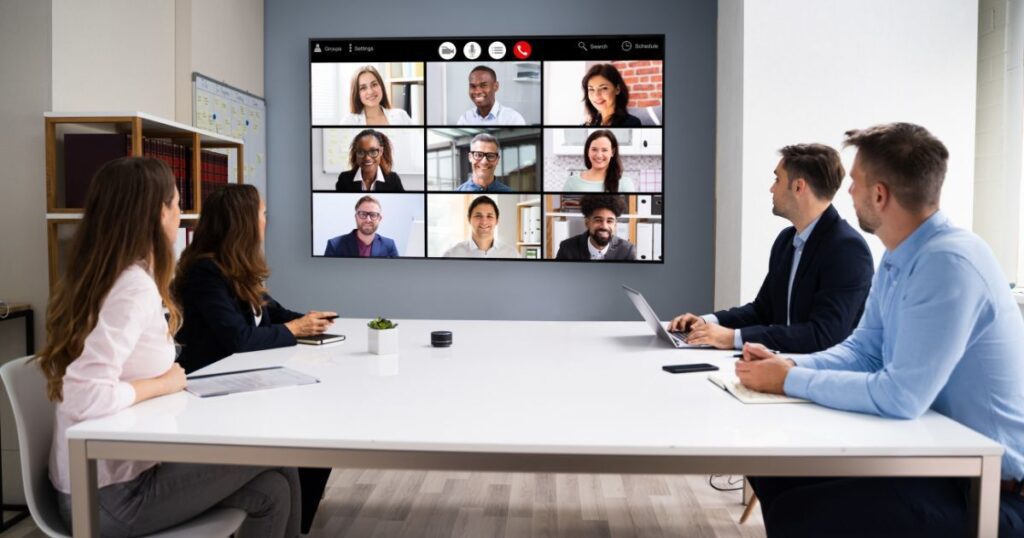
The New Rules of Hybrid Communication
Hybrid work introduced freedom, but it also created fragmentation. In 2026, the world’s most effective teams are those that intentionally engineer communication rather than relying on old office habits.
A McKinsey report on future productivity highlights that companies embracing structured communication protocols see a 20 percent improvement in cross-team alignment. These protocols include clarifying response-time expectations, creating shared digital workspaces, and shifting from meeting-heavy workflows to asynchronous-first environments.
Yet communication today is less about message frequency and more about precision. Teams overwhelmed by digital noise are reducing internal messages by up to 30 percent by adopting “signal over noise” frameworks that prioritize clarity over speed. Leading firms such as Shopify and Atlassian have already removed unnecessary meetings entirely, replacing them with structured briefing documents and asynchronous decision logs.
This signals a broader truth: hybrid teams are no longer trying to replicate office communication online. They are building something fundamentally better.
AI as the New Communication Partner
Artificial intelligence has become the connective tissue of hybrid collaboration. In 2026, AI assistants are embedded into nearly every stage of communication, from drafting project updates to summarizing complex discussions.
According to IDC’s 2025 Future of Work report, more than 60 percent of global companies now rely on AI-driven tools to manage internal knowledge flows. This shift is reducing context-switching, one of the biggest drains on productivity in hybrid settings.
AI’s role is expanding in three critical ways:
1. Context Compilers
AI tools automatically convert meeting recordings, documents, and messages into actionable summaries. This enables team members in different time zones to stay aligned without attending every meeting.
2. Decision Accelerators
AI identifies bottlenecks, flags decisions awaiting approval, and surfaces relevant insights from historical team data. In hybrid environments where miscommunication is costly, these systems act as silent project managers.
3. Collaboration Coaches
Emerging AI models analyze communication patterns, offering personalized recommendations on tone, clarity, and timing. For leaders managing multinational teams, these insights reduce interpersonal friction and cultural misunderstandings.
As one CIO from a Fortune 500 retail company shared during a WorkTech 2025 panel, “AI freed us from the administrative noise of hybrid work. It didn’t just make us faster. It made our collaboration more human.”
Culture Is the Infrastructure: Rebuilding Trust in Distributed Teams
Technology alone cannot solve hybrid friction. The real transformation lies in cultural infrastructure. Leaders must rewire trust, psychological safety, and accountability when teams rarely share physical space.
A Harvard Business Review study notes that employees in hybrid roles experience a 17 percent decline in perceived visibility compared to in-office peers. This affects confidence, recognition, and career progression.
To counteract this, companies are adopting:
Outcome-based communication norms
Instead of valuing responsiveness, teams emphasize deliverables, measurable contributions, and documented progress. This reduces pressure to always be online and offers clearer evaluation criteria.
Transparent workflows
Shared dashboards and open channels allow employees to understand what others are working on. This fosters alignment and reduces the silent frustrations that often plague remote teams.
Ritualized connection points
Weekly digital check-ins, hybrid town halls, and informal virtual gatherings are becoming cultural anchors. They create a sense of belonging without forcing synchronous participation.
Global communication literacy
As hybrid teams become more international, cultural nuance training is emerging as a core leadership skill. Companies like Unilever and SAP have expanded cross-cultural communication programs to improve collaboration across languages, regions, and norms.
In 2026, culture is no longer an intangible asset. It is the infrastructure enabling collaboration to thrive.
The Office Reinvented: Hybrid Spaces Built for Connection
Physical offices are evolving into hubs for intentional collaboration rather than routine work. According to CBRE’s 2025 Occupier Sentiment Survey, 85 percent of companies have redesigned or are redesigning workspace layouts to prioritize teamwork over individual tasks.
Hybrid-era offices are:
Destination workplaces
Instead of requiring attendance, organizations are giving employees reasons to come in: innovation labs, team strategy days, cross-department workshops, prototyping sessions, and cultural rituals.
Collaboration-first layouts
Open brainstorming zones, immersive mixed-reality rooms, and flexible seating are replacing traditional cubicles.
Technology-integrated environments
Advanced video walls, spatial audio, AI-powered note-taking systems, and touchscreen collaboration boards ensure remote and in-person colleagues participate on equal footing.
A real-world example comes from Singapore’s fintech sector, where several fast-scaling startups have built hybrid collaboration studios featuring VR-enabled design sprints, allowing global engineers to co-create in real time.
In the hybrid mindset, the office becomes a tool, not a requirement.
Asynchronous-First Workflows: The Productivity Engine of 2026
Asynchronous communication is no longer a niche preference. It has become the strategic backbone of hybrid operations. The biggest productivity gains are emerging from teams that reduce reliance on real-time meetings and adopt documentation-first cultures.
Companies like GitLab, Doist, and Notion pioneered this approach; now it is becoming mainstream.
Why async wins
- Eliminates time-zone barriers
Projects continue around the clock when communication is not bound to synchronous meetings. - Reduces cognitive overload
Fewer meetings free mental bandwidth for deep work. - Improves decision quality
Written inputs often produce deeper, more thoughtful conversations than spontaneous verbal exchanges. - Creates institutional memory
Documentation becomes a long-term asset for onboarding and strategic alignment.
A 2025 Workforce Resilience Survey found that asynchronous-first organizations reported a 25 percent increase in employee satisfaction and a 40 percent decline in meeting fatigue.
By 2026, async is no longer about flexibility. It is a competitive advantage.
Leadership Evolution: From Managers to Connectors
Hybrid collaboration requires a fundamentally different leadership model. Managers once responsible for monitoring work now become facilitators of clarity, trust, and direction.
Leaders must excel in:
Narrative communication
Because hybrid teams lack spontaneous interactions, leaders must articulate strategy frequently and consistently.
Empathy at scale
The most successful managers understand the emotional signals hidden in digital communication.
Outcome coaching
Coaching now centers on guiding employees toward self-management, not task execution.
Cross-border fluency
As global hiring expands, leaders must manage distributed teams with awareness of cultural nuances, work-style differences, and local regulations.
Microsoft’s 2025 Work Trend Index found that teams with “highly empathetic digital leadership” showed a 35 percent increase in innovation velocity.
Leadership in 2026 is less hierarchical and more connective.
The Future of Hybrid Collaboration: What’s Coming Next
Hybrid work will continue evolving through 2026 and beyond, driven by emerging technologies and shifting employee expectations.
Trends on the horizon:
- Real-time language translation integrated into video meetings
- Holographic collaboration rooms for immersive co-presence
- Predictive communication analytics anticipating misunderstandings before they occur
- AI-driven role orchestration optimizing who should work on what, based on skills and workload
- Well-being-integrated workflows that adjust schedules based on fatigue signals from wearable devices
The hybrid workplace is moving toward personalization, automation, and global inclusivity. Companies that embrace the collaboration mindset early will become the market leaders of the next decade.
Conclusion: The New Competitive Edge
In 2026, collaboration is not a department or a platform. It is a mindset one defined by clarity, trust, and continuous adaptation.
Teams that thrive in hybrid environments are those that:
- Use AI to enhance communication, not replace it
- Build cultures rooted in transparency and psychological safety
- Redesign offices for purposeful, high-impact connection
- Adopt asynchronous-first workflows for deep productivity
- Develop leaders who communicate with empathy and strategic clarity
As the boundaries between digital and physical work blur further, the companies that invest in these capabilities are the ones that will innovate faster, attract global talent, and outpace competitors.
Hybrid work is no longer the future. It is the frontier and collaboration is its currency.