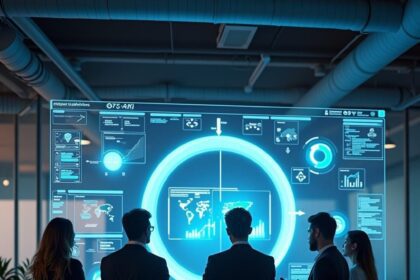

Women entrepreneurs are redefining the global business landscape at a pace unmatched in history. As the future of work accelerates driven by technology, flexible models, and shifting economic priorities women founders are emerging as architects of this new era. From digital-first ventures to sustainable enterprises, their approach blends innovation, resilience, and a human-centered ethos. This article examines the most important trends shaping the future of work for women entrepreneurs and the implications for the global economy.

The Rise of Digital-First Female Entrepreneurship
Digital transformation is leveling the playing field for women entrepreneurs. Low-cost digital tools, online marketplaces, and remote teams are enabling women to launch scalable ventures from anywhere. According to the Global Entrepreneurship Monitor’s 2023 data, women-owned businesses grew nearly 10 percent in digital sectors alone, driven by ecommerce and AI-powered services.
Digital-first models allow women founders to bypass traditional barriers like limited access to capital or geographic constraints—while targeting global customers. For example, Kenyan entrepreneur Hilda Moraa built Pezesha, a fintech marketplace, using cloud-based tools and remote engineering teams. Her success illustrates how digital ecosystems are expanding opportunities for women in emerging markets.
As AI and automation continue to evolve, women-led companies leveraging these technologies early will hold a strong competitive edge.
Remote and Hybrid Work as Catalysts for Women-Led Innovation
Remote and hybrid work have become core components of modern business strategy, and women entrepreneurs are among their strongest adopters. A 2024 Gartner report notes that nearly 70 percent of female-owned startups now operate with remote teams.
This shift offers two strategic advantages:
- Access to global talent pools.
- Reduced operational costs and increased flexibility.
Women founders often prioritize flexible work environments that support both employees’ productivity and personal wellbeing. This empathy-driven leadership is positioning women-led companies at the forefront of organizational innovation. Startups like Re:Coded, co-founded by Selva Demiralp, demonstrate how hybrid work can foster diverse, globally distributed teams that build high-impact digital products.
As the future of work becomes more decentralized, women entrepreneurs will continue shaping inclusive and adaptable work cultures.
Financing Models Evolve: New Paths for Women Entrepreneurs
Funding disparities have long posed challenges for women founders, but new financing models are shifting the landscape. According to PitchBook’s 2024 data, female-led startups secured a record high of $44 billion globally, supported by microfunds, crowdfunding platforms, and venture networks dedicated to women.
Key trends gaining momentum include:
- Revenue-based financing, which provides capital without equity dilution.
- Crowd-investing, enabling women to tap into consumer trust and community advocacy.
- Women-focused VC funds, such as Female Founders Fund and Aruwa Capital.
A compelling case is Spanx founder Sara Blakely, who initially grew her company without traditional VC and later inspired a generation of women to pursue alternative funding paths. This democratization of capital will continue empowering women to scale globally in the years ahead.
Sustainability and Social Impact as Growth Engines
Women entrepreneurs are leading the charge in sustainable and purpose-driven business models. The International Labour Organization reported in 2024 that women-owned SMEs are 30 percent more likely to adopt sustainability frameworks than their male counterparts.
This commitment aligns with global consumer demand: buyers increasingly prefer brands that prioritize environmental responsibility, ethical sourcing, and community impact.
Examples include:
- Anya Hindmarch’s circular fashion initiatives.
- Yvonne Chaka Chaka’s humanitarian-driven enterprises in Africa.
- Asia-Pacific founders building zero-waste consumer brands.
This trend signals a future where women entrepreneurs not only drive profit but also shape a more sustainable global economy.
Automation and AI: Empowering, Not Replacing, Women Entrepreneurs
AI and automation are transforming industries, but women entrepreneurs are leveraging these technologies as force multipliers. Instead of replacing roles, AI is enabling founders to scale faster by automating tasks such as customer support, financial forecasting, and marketing analytics.
A Deloitte study from 2024 found that women-led companies using AI in operations grew 15 percent faster than those relying on manual workflows. The rise of no-code and low-code platforms is further enabling non-technical founders many of whom are women to build sophisticated digital solutions without extensive technical expertise.
This shift empowers women to focus on strategic leadership, innovation, and market expansion.
A More Inclusive Global Workforce Emerges
One of the most influential trends is the growing emphasis on inclusive workforce development. Women entrepreneurs are reshaping the future of work by prioritizing diversity, equitable hiring practices, and mentorship-driven cultures.
Globally, initiatives like SheWorks, Girls in Tech, and WomenRise are equipping millions of women with digital and entrepreneurship skills. These programs help bridge gender gaps in tech, leadership, and STEM fields.
As more women gain access to education and digital tools, the entrepreneurial pipeline expands strengthening global economies and driving innovation across sectors.
Conclusion: The Next Decade Belongs to Women Innovators
The future of work is being built by women who combine technological agility with human-centered leadership. Whether through AI-powered startups, sustainable supply chains, or remote-first companies, women entrepreneurs are redefining what modern business looks like.