

In a year defined by seismic technological shifts from generative AI to sustainable business models a handful of executives have distinguished themselves not just by financial results but by the depth of their innovation. In this article, we highlight five business leaders whose strategies in 2025 exemplify visionary leadership, bold strategic reinvention, and global relevance. These leaders illustrate how the most forward-thinking executives are thinking beyond incremental change to reshape industries.
Satya Nadella – Chief Executive Officer, Microsoft
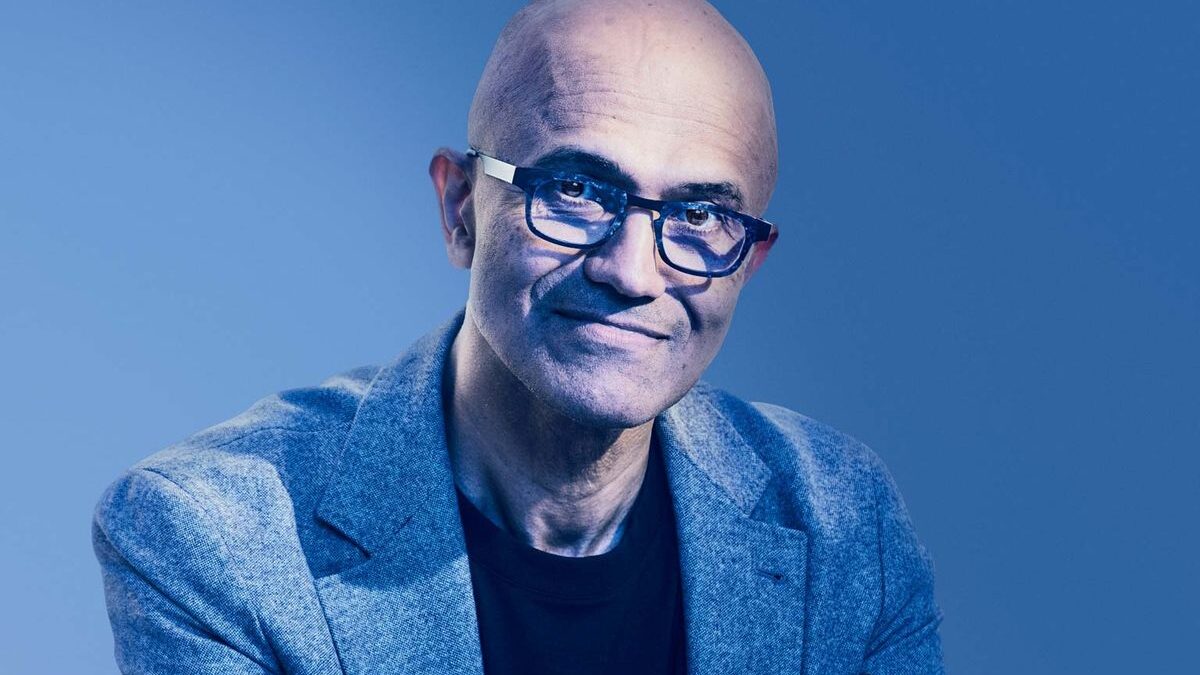
Why he is exceptional
Under Nadella’s leadership, Microsoft continues to pivot decisively around an “AI-first” agenda. His 2025 annual letter emphasised the need to “think in decades, execute in quarters”, placing long-term platform strategy at the heart of innovation.
He has repositioned Microsoft not just as a cloud vendor but as the foundational layer of the next computing era with over 400 data-centres in 70 regions, and major AI deployments baked into Microsoft 365 productivity tools.
In 2025 he restructured the company, delegating commercial business to a dedicated executive so he could focus on advanced technical innovation.
Key strategic moves
- Introduced “model-forward” features in Microsoft 365, enabling generative AI agents inside Excel, Teams and more.
- Placed Azure as the infrastructure backbone for enterprise AI, signalling decades-long commitment rather than a short burst.
- Reorganised corporate structure so that technical innovation is freed from commercial constraints, a signal of how crucial technology leadership has become.
Why this matters for business readers
Nadella’s approach underscores that innovation today is not about discrete new products alone. It’s about creating platforms, redefining workflow, and investing for multi-year horizons. For entrepreneurs and corporate leaders alike, the lesson is: embed innovation in your company’s architecture, not just its “special project”.
Mahiben Maruthappu – Founder & CEO, Cera

Why he is exceptional
Maruthappu offers a striking example of innovation outside of big-tech, bridging health care, digital platforms and workforce transformation. By 2025 Cera delivered over 2 million home-care visits monthly across the UK, via an AI-enabled platform with thousands of carers.
In doing so, he addresses three converging global challenges: ageing populations, digital health fatigue and workforce shortages. The result is a scalable business model with social impact baked in.
Key strategic moves
- Leveraged on-demand staffing via digital match-making (like “Uber for care”) but layered it with predictive analytics and training to drive quality and efficiency.
- Raised significant capital in 2025 ($150 m) for further scaling and AI-led operations, signalling investor confidence in non-traditional high-tech markets.
- Positioned the company to serve public-sector partners and large insurers, showing how innovation can thrive within established ecosystems (not only purely disruptive start-ups).
Why this matters for business readers
Maruthappu shows how innovation need not come only from consumer apps or big-tech. You can apply digital-first thinking to legacy industries (care, education, infrastructure), unlocking value and scaling fast. For founders in emerging markets or “slow” industries, the blueprint is clear: combine technology, mission and large addressable market.
Strive Masiyiwa – Founder & Executive Chairman, Econet Global / Cassava Technologies

Why he is exceptional
Masiyiwa exemplifies innovation with a global and emerging-market lens. Based in Africa, his companies have invested heavily in infrastructure, digital financial services and, in 2025, announced plans for AI manufacturing hubs in five African nations.
He demonstrates that innovation is not only about consumer gadgets or Silicon Valley but can scale in high-growth emerging economies with unique levers of value.
Key strategic moves
- Through Cassava Technologies, Masiyiwa is building “AI factories” in South Africa, Rwanda, Ghana, Eswatini and Uganda. These are designed to localise AI innovation rather than outsource from the West.
- Leveraged Liberia’s largest fibre-optic infrastructure (via Liquid Telecom) to create digital ecosystems across Africa, enabling higher-value enterprise and platform growth.
- Integrated philanthropy, education and ecosystem building, demonstrating that innovation in emerging markets often demands a more holistic approach than pure tech disruption.
Why this matters for business readers
Masiyiwa’s story reminds us that tomorrow’s growth is global and multi-polar. Entrepreneurs should look beyond North America and Western Europe there are vast opportunities in digital infrastructure, AI localisation and platform plays in emerging markets. Moreover, innovation there often requires ecosystem thinking: policy, education, infrastructure, talent.
Reem Asaad – Business Leader (Middle East)

Why she is exceptional
According to regional listings of business innovators, Asaad is cited among the “Middle East’s 10 Most Influential Business Leaders to Follow in 2025”. Her cross-industry reach (tech, operations, executive leadership) and her regional context make her a standout example of innovation within the Middle East.
Key strategic moves
- Focused on harnessing digital technologies, including cloud, AI and operations optimisation, to drive transformation in industries spanning the Gulf region.
- Served as a role model for diversity and leadership in a market historically under-represented in global innovation rankings.
- Applied global best-practices in innovation (platform strategies, agile operating models) while adapting them to regional regulatory, cultural and socio-economic realities.
Why this matters for business readers
For global entrepreneurs and executives, Asaad’s leadership illustrates how innovation is increasingly distributed. Regions like the Middle East are no longer just adopters they’re innovators. For those looking to expand or partner globally, understanding regional leadership and innovation ecosystems (not only North America or China) will be critical.
Alex Mativo – Founder & CEO, E-LAB / Duck

Why he is exceptional
While not a broad-industry CEO, Mativo’s work encapsulates “deep innovation” with social and environmental purpose. Based in Kenya, he is founder of E-LAB (which transforms e-waste into fashion/interior products) and Duck (a retail-analytics AI start-up) combining sustainability, tech and entrepreneurship in a high-growth African context.
He typifies how “innovation leaders” are not just large-company executives but also founders with mission, tech-driven models and global relevance.
Key strategic moves
- Applied circular-economy thinking to e-waste in Africa, turning environmental challenge into commercial opportunity.
- Built data-analytics tools for consumer brands across Africa, helping them gain retail intelligence previously only available in mature markets.
- Positioned himself as both innovator and storyteller, using his youthful energy and social media presence to amplify his ventures.
Why this matters for business readers
Innovation isn’t only about global platforms or massive budget it can be local, lean, and mission-driven. Founders and business leaders should pay attention to: high-impact niche opportunities, combining tech + sustainability + local relevance, and storytelling that enables scale beyond geography.
Conclusion: Key Takeaways & Forward Outlook
Across these five leaders we observe consistent themes:
- Platform thinking over product thinking. Large companies like Microsoft are shifting from discrete offerings to platforms that become infrastructure for others (e.g., AI agents, data centres).
- Emerging market innovation. Innovation geography is broadening. Emerging markets are increasingly home to breakthrough business models, not just execution arms.
- Mission-driven, tech-enabled disruption. Founders like Maruthappu and Mativo show that blending purpose (care, sustainability) with digital scaling creates differentiated value.
- Long-term orientation. These leaders are playing long games (10-year vision) while executing operational excellence quarterly.
- Ecosystem & global lens. Whether an African fibre-optic network or a Middle East executive, thinking globally and across ecosystems is non-negotiable for 2025 innovation leadership.
Actionable Takeaways for You:
- Audit your strategy: Is your business thinking in platforms and ecosystems, or only discrete products?
- Evaluate your geography: Could emerging markets or underserved regions offer your next innovation frontier?
- Combine purpose, tech, and scale: The next “innovative leader” will likely sit at that intersection.
- Set a vision horizon of 5-10 years, but build operational discipline for quarterly execution.
- Develop your ecosystem: partnerships, talent, infrastructure all matter more than ever.
Forward Outlook:
As we move deeper into the AI era and sustainability becomes an investment imperative, the executives who will stand out in the next wave will be those who embed innovation into their business’s DNA not as an initiative, but as a structuring principle. Watching how Satya Nadella executes the next decade, how Mahiben Maruthappu scales care infrastructure, or how regional leaders like Reem Asaad and Alex Mativo carve new pathways will provide blueprints for the next generation of global business leadership.