
Creativity is often romanticized as a spark of genius that appears out of nowhere. Yet for entrepreneurs, executives, engineers, and creators across industries, innovative thinking rarely happens in peaceful isolation. More often, world-changing ideas are forged while racing against deadlines, navigating crises, or competing for limited opportunities. High-pressure environments can either elevate creativity or shut it down completely. Understanding the psychology behind this tension helps leaders design conditions where innovation thrives instead of collapses.
In recent years, research in cognitive psychology and organizational behavior has revealed how stress hormones, emotional states, team culture and environmental cues impact the brain’s ability to generate, evaluate and refine ideas. This article explores the forces behind creative performance under pressure and offers actionable strategies used by top-performing companies and creators worldwide.

How Pressure Impacts the Creative Brain
Pressure triggers a biological stress response driven by cortisol and adrenaline. While these chemicals sharpen focus, they can also narrow thinking. Harvard neuroscientist Shelley Carson’s work shows that creativity depends on the brain’s ability to toggle between two key modes: focused attention and defocused attention. Under acute pressure, the brain often gets locked into focus mode, which improves execution but hinders idea generation.
A 2023 study from the American Psychological Association found that mild stress can improve divergent thinking by increasing alertness, but chronic or intense pressure significantly reduces the number and originality of ideas. This inverted-U relationship explains why hackathons, pitch competitions and newsroom deadlines can inspire bursts of innovation, while long-term burnout destroys it.
Real-world cases underscore this dynamic. Pixar famously uses structured creative pressure tight but manageable deadlines combined with robust team support to fuel innovation. Conversely, Nokia’s internal high-pressure culture in the early 2010s reportedly became fear-driven, stifling experimentation and accelerating the company’s decline.
The Role of Emotion in High-Stakes Innovation
Emotion is the compass of creativity. Positive emotions broaden cognitive flexibility, enabling the brain to make unconventional associations. Negative emotions, however, narrow cognition and push people toward conventional solutions.
Psychologist Barbara Fredrickson’s broaden-and-build theory explains why leaders at companies like Google and Spotify integrate play, humor and psychological safety into their workflows. Their teams are encouraged to explore, not just execute.
But not all negative emotion is harmful. Studies from UC Berkeley’s Haas School of Business show that controlled frustration can spark deeper problem-solving when individuals feel empowered to overcome challenges. This is why many startup founders describe moments of “productive tension” before breakthroughs.
In high-pressure environments, the emotional climate often matters more than the pressure itself. A supportive culture transforms pressure into fuel; a fear-based climate turns it into a barrier.
Team Dynamics: Why Collective Creativity Behaves Differently
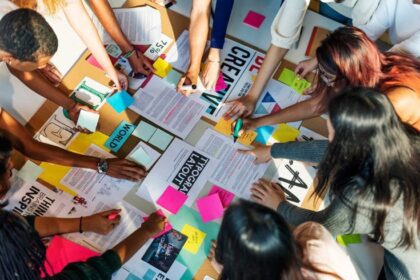
Creativity is not just an individual activity. In high-pressure situations, group dynamics can enhance or inhibit innovation.
Social psychologists note that teams under pressure often fall into two traps:
- Groupthink – conformity reduces originality
- Social loafing – individuals contribute less when responsibility feels diffuse
Yet the opposite can also occur. When teams have clear roles, shared purpose, and trust, pressure strengthens cohesion and accelerates creative output. Research from MIT’s Human Dynamics Lab highlights that high-performing creative teams share three traits:
- High-frequency face-to-face communication
- Equal conversational turn-taking
- A mix of introverts and extroverts
A compelling example is NASA’s Jet Propulsion Laboratory (JPL). During the Mars rover missions, high-pressure “tiger teams” were able to solve complex challenges through rapid collaboration, psychological safety and open idea exchange. Pressure did not diminish creativity; it sharpened it.
Cognitive Tools That Support Creativity Under Constraints
Pressure can limit mental bandwidth, but cognitive tools help preserve creativity even in intense conditions.
Constraint Reframing
Instead of viewing constraints as obstacles, innovators can treat them as creative prompts. The global PPE shortage during the early COVID-19 pandemic prompted Dyson to design a new ventilator in 10 days using available manufacturing constraints. Constraint reframing turns pressure into clarity.
Structured Divergence and Convergence
The most successful teams separate ideation from evaluation. Design-thinking methodologies popularized by IDEO encourage diverging to generate many ideas, then converging to select and refine them. This prevents the brain from prematurely killing unconventional concepts under pressure.
Mental Simulation
Elite athletes use visualization to prepare for competition. Creativity benefits too. Simulating outcomes reduces cognitive load during real-time decision-making. Research from Carnegie Mellon University shows that mental pre-rehearsal enhances creative insight during stress.
Leadership Behaviors That Unlock High-Pressure Creativity
Leaders are often the single biggest determinant of whether pressure fuels or kills creativity.
The most effective leaders in high-pressure environments:
- Set clear but flexible goals
Ambiguity compounds stress. Precision reduces cognitive drain. - Protect exploration time
3M’s “15 percent time” policy, famously responsible for the invention of the Post-it Note, shows that structured freedom sustains innovation even in competitive industries. - Model calm decision-making
Research from the London Business School shows that calm leaders reduce team cortisol levels, enabling more original thinking. - Create safe-to-fail conditions
Psychological safety is repeatedly correlated with creative performance, especially under pressure. Teams innovate more when mistakes are treated as learning. - Celebrate micro-wins
Progress triggers dopamine, which supports cognitive flexibility.
Leadership is not about eliminating pressure, but channeling it.
Case Studies: Creativity Under Extreme Pressure
Airbnb’s Near-Collapse in 2009
Facing bankruptcy, Airbnb founders redesigned their listings by taking professional photos themselves. This simple but creative experiment led to a dramatic increase in bookings and became a cornerstone of the platform’s growth. Extreme pressure forced unconventional thinking.
Singapore’s Smart Nation Initiative
Under the pressure of limited land and resources, Singapore built one of the world’s most advanced digital government ecosystems. Innovation was driven not by abundance, but constraint.
Formula One Racing Teams
F1 engineers operate under severe time, safety and regulatory pressure. Yet they produce some of the world’s most sophisticated engineering innovations. The pressure accelerates iteration cycles and encourages creativity through necessity.
How Individuals Can Stay Creative Under Pressure
Even in high-stress settings, individuals can train themselves to be more creative.
- Use micro-breaks to reset cognitive resources
- Switch the environment, even briefly, to spark new associations
- Keep an idea journal to capture thoughts without judgment
- Practice mindfulness, which reduces stress reactivity and enhances divergent thinking
- Seek cross-disciplinary exposure, which broadens the mental toolbox
A study from the University of Amsterdam found that individuals who engaged in 10 minutes of mindfulness regained creative performance under pressure almost immediately.
Conclusion: Creativity Thrives With the Right Kind of Pressure
High-pressure environments do not automatically diminish creativity. They amplify whatever psychological, cultural and structural conditions already exist. When leaders foster emotional safety, structure cognitive processes, and frame constraints as opportunities, pressure transforms from a threat into a catalyst.
The future of innovation belongs to organizations and individuals who understand this psychology. As markets evolve faster, the ability to think creatively under pressure will be a defining competitive advantage.