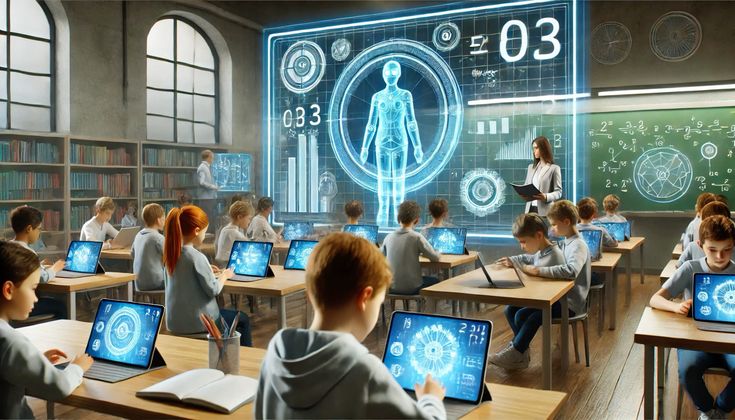
By 2040, education will look nothing like today’s classrooms. Artificial Intelligence (AI) is set to dismantle traditional teaching models, reshaping how humans acquire knowledge, adapt skills, and define intelligence itself. From hyper-personalized learning pathways to intelligent tutors that evolve alongside students, AI is not just transforming education it’s redefining the purpose of learning.
A 2025 UNESCO report projects that by 2040, over 60% of global education systems will integrate AI-driven adaptive technologies, shifting the focus from memorization to mastery. The coming decades will mark a decisive transition from institutions of instruction to ecosystems of lifelong learning.
From Standardized Learning to Personalized Mastery
The most profound change will be the end of standardized education. Instead, AI will create individualized learning journeys. Algorithms will continuously analyze a student’s strengths, weaknesses, and interests to deliver tailor-made content.
Imagine a 14-year-old student in Nairobi using an AI tutor that recognizes when she learns best through visual simulations and adjusts lessons accordingly. This is not futuristic fiction AI systems like Squirrel AI in China and Carnegie Learning in the US are already demonstrating double-digit improvements in retention and engagement.
AI-powered systems will serve as co-pilots for teachers, not replacements. Educators will focus less on delivering content and more on mentoring, creativity, and emotional intelligence skills that machines cannot replicate.
The Rise of Skills Intelligence
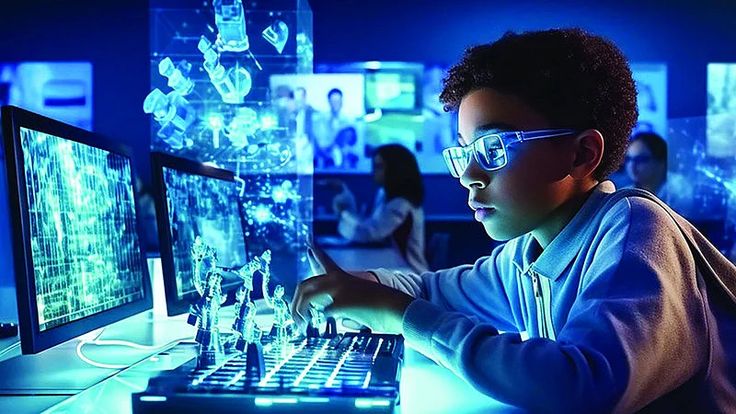
By 2040, the concept of “degrees” will evolve into dynamic skill portfolios. AI-driven platforms will continuously assess workforce needs and recommend new learning paths for individuals to remain employable.
According to the World Economic Forum, 85 million jobs will be displaced by automation by 2030, but 97 million new roles will emerge, centered around digital fluency, creativity, and critical thinking. In this landscape, AI will function as a lifelong career coach, analyzing labor market trends and personal competencies to suggest just-in-time reskilling opportunities.
For example, an AI platform could detect emerging demand for quantum computing specialists and automatically recommend micro-courses to data scientists, bridging skill gaps before they widen.
Equity and Accessibility in Global Education
AI has the potential to democratize learning for billions. With cloud-based adaptive education, even remote communities will gain access to high-quality instruction in their native languages. Translation AI, such as DeepL and Google’s Gemini, already delivers real-time multilingual education, breaking down linguistic barriers.
However, the digital divide remains a critical obstacle. Without equitable access to data infrastructure, AI could widen global inequalities. As Audrey Azoulay, Director-General of UNESCO, warned, “AI in education must serve as a bridge, not a barrier.” Governments and private sectors will need to collaborate on affordable connectivity, data ethics, and teacher retraining to ensure inclusive adoption.
Ethical Learning Ecosystems
With AI taking center stage in education, ethical frameworks will be essential. By 2040, students will need to understand algorithmic bias, digital privacy, and the societal implications of AI.
Institutions will likely adopt “AI literacy” as a core subject alongside math and science. As Stanford University’s Human-Centered AI Institute emphasizes, the next generation must learn not only how to use AI but also how to question it.
To build trust, transparency in AI decision-making will become mandatory. Blockchain-based credentialing systems could track every learning achievement, making academic integrity verifiable and tamper-proof.
Human Skills in the Age of Intelligent Machines
Ironically, the more AI automates cognitive tasks, the more valuable human-centered skills will become. Creativity, empathy, and ethical reasoning will define competitive advantage.
Employers will seek “T-shaped” professionals deep in technical knowledge, broad in human understanding. Educational institutions will mirror this shift by blending STEM with the arts and ethics, fostering what the OECD calls “future-ready learners.”
By 2040, we may see hybrid classrooms where AI tutors manage personalized instruction while human mentors cultivate collaboration, curiosity, and compassion the essence of what makes learning profoundly human.
Conclusion: The Future Is Co-Intelligent
By 2040, AI will not replace teachers or learners it will redefine both. The education of the future will be less about information transfer and more about co-intelligence: humans and machines learning together, evolving together.
Those who adapt to this new paradigm will not only stay employable but thrive in a world where learning never ends. The future of education is not automation; it is augmentation.