
Motivation isn’t reliable, and most people discover this the hard way. One day you feel inspired, focused, and unstoppable. The next day, that energy is gone, even though the goals are still there. This inconsistency is not a personal failure. It is a structural problem with how motivation works. Motivation isn’t reliable because it depends on mood, environment, energy, and emotion. Discipline, systems, and habits are what carry progress forward when motivation disappears. Understanding why motivation isn’t reliable explains why so many people start strong and stall later.
Why Motivation Isn’t Reliable by Design
Motivation is emotional. It rises when conditions feel right and fades when they do not. Stress, fatigue, boredom, fear, or distraction can shut it down instantly. That is why motivation isn’t reliable as a foundation for long-term work.
Neuroscience shows that motivation is closely tied to dopamine, which responds to novelty and reward. Once a task becomes familiar or difficult, motivation naturally declines. This is not a flaw in character. It is how the brain conserves energy. Relying on motivation means relying on a system that is designed to fluctuate.

The Cost of Believing Motivation Isn’t Reliable Too Late
Many people organize their lives around waiting to feel motivated. They delay action until they feel ready. When motivation doesn’t show up, progress stalls. This is where the belief that motivation isn’t reliable becomes painful.
Projects drag on. Goals reset every Monday. Confidence erodes. Over time, people start blaming themselves rather than the strategy. The real issue is not lack of desire. It is dependence on a force that cannot be controlled.
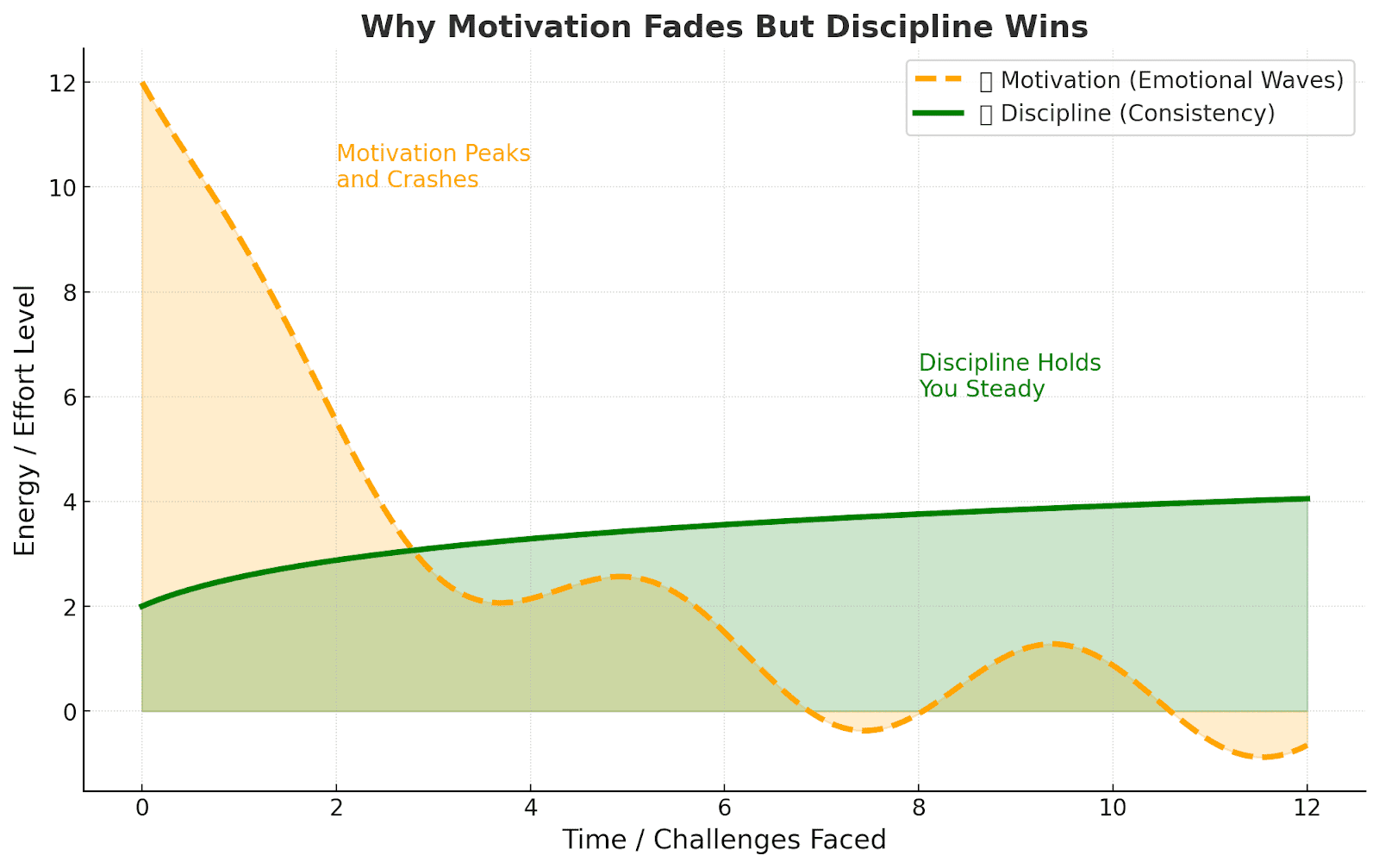
Why Discipline Works When Motivation Doesn’t
Discipline is behavioral, not emotional. It does not require inspiration. It requires a decision made in advance. This is why discipline outperforms motivation every time.
When motivation isn’t reliable, discipline provides structure. You act because it is time, not because you feel like it. Athletes, writers, founders, and high performers all rely on discipline because they understand motivation will fail them eventually.
Discipline turns action into routine. Routine reduces friction. Reduced friction makes progress sustainable.
Systems Beat Motivation Every Time
The most effective people do not try to feel motivated. They build systems that work even when motivation is gone. Systems remove decision-making from the moment.
If motivation isn’t reliable, systems are the workaround. A system decides when you work, how long you work, and what you work on. You simply follow it. This reduces cognitive load and emotional negotiation.
Examples include fixed work hours, pre-defined task lists, habit tracking, and environment design. None of these require motivation. They require consistency.

Motivation Isn’t Reliable in Hard Moments
When things go wrong, motivation is usually the first thing to disappear. Failure, criticism, uncertainty, and slow progress drain it quickly. This is why motivation isn’t reliable when it matters most.
Discipline, on the other hand, is strongest in hard moments. It shows up precisely when motivation cannot. It allows progress to continue through doubt, boredom, and resistance. Over time, discipline builds confidence because results follow action, not feelings.
How People Misunderstand Motivation

Motivation is often framed as the starting point. This is backwards. Action creates motivation more reliably than motivation creates action. When you start moving, momentum follows.
Believing motivation isn’t reliable does not mean rejecting motivation entirely. It means treating motivation as a bonus, not a requirement. When motivation shows up, it helps. When it doesn’t, progress continues anyway.
This mindset shift is what separates consistency from cycles of burnout.
Discipline Builds Identity, Not Just Results
When you act consistently, even without motivation, your identity changes. You begin to see yourself as someone who follows through. This identity reinforces discipline, creating a loop.
Motivation isn’t reliable because it depends on how you feel. Discipline becomes reliable because it becomes who you are. Over time, this identity-driven approach makes work feel lighter, not heavier.
People who rely on discipline often report less stress because they stop negotiating with themselves daily.

Practical Ways to Work When Motivation Isn’t Reliable
To move forward when motivation isn’t reliable, simplify execution:
- Reduce tasks to the smallest possible action
- Commit to time, not outcome
- Remove distractions before starting
- Start before you feel ready
- Track consistency, not intensity
These strategies work because they bypass motivation entirely. They make action inevitable.
Why Motivation Isn’t Reliable but Still Useful
Motivation still has value. It can spark beginnings and fuel short bursts of effort. The mistake is treating it as a requirement rather than a resource.
When motivation aligns with discipline, progress accelerates. When it doesn’t, discipline carries the load. Understanding that motivation isn’t reliable allows you to use it wisely instead of depending on it blindly.
Conclusion
Motivation isn’t reliable because it was never meant to be. It is emotional, reactive, and temporary. Discipline, systems, and habits are stable, repeatable, and dependable.
People who succeed long-term do not wait to feel motivated. They build structures that make action automatic. When motivation appears, they use it. When it disappears, they keep moving.
If you accept that motivation isn’t reliable, you stop fighting yourself and start building a life that works even on the hardest days.