
Introduction
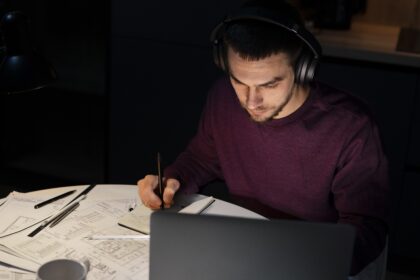
Startup decision making rarely happens in boardrooms during business hours. More often, the most critical calls are made at 2 AM, when inboxes are quiet, advisors are asleep, and the weight of responsibility sits squarely on the founder’s shoulders. Startup decision making at this hour is raw, imperfect, and deeply human. With limited data, high uncertainty, and real consequences, founders must rely on judgment rather than process. Understanding how startup decision making works in these moments reveals how companies truly survive, pivot, or fail.
Why Startup Decision Making Happens at 2 AM
Startup decision making is pushed into the night because startups operate in compressed timelines. Cash runways shrink, customers churn unexpectedly, and technical issues surface without warning. During the day, founders manage meetings, teams, and external expectations. At night, they finally have space to think.
At 2 AM, startup decision making becomes unavoidable. Questions like whether to cut costs, delay a launch, or confront a cofounder cannot wait for perfect clarity. According to a 2024 Harvard Business Review analysis, founders report that their most consequential decisions are often made outside formal planning cycles.

The Mental State Behind Late-Night Startup Decision Making
Startup decision making at night is shaped by fatigue, stress, and isolation. Cognitive load is high, but emotional filters are lower. This can be dangerous, but it can also be clarifying.
Many founders say late-night startup decision making strips away distractions. Without external noise, priorities become clearer. The risk is over-indexing on fear or optimism. Experienced founders learn to recognize when exhaustion is distorting judgment and when it is sharpening it.

How Founders Actually Make Decisions at 2 AM
Startup decision making at 2 AM follows patterns that differ from textbook strategy. Founders do not run models or frameworks. They ask simpler questions.
Will this decision keep the company alive?
Does this protect the team?
Can this be reversed?
In high-pressure moments, startup decision making favors reversible choices. Founders often delay irreversible moves until daylight, while acting quickly on decisions that preserve optionality.
This instinct aligns with research from McKinsey showing that fast, reversible decisions outperform slow, perfect ones in uncertain environments.

Tools That Support Startup Decision Making at Night

Despite the solitude, startup decision making at night is rarely unsupported. Founders rely on simple tools: written notes, decision logs, financial dashboards, and asynchronous communication platforms.
Writing is especially powerful. Externalizing thoughts reduces emotional overload and improves clarity. Many founders keep private decision journals to track why choices were made, helping future startup decision making improve over time.
The Role of Intuition in Startup Decision Making
Intuition plays a larger role in startup decision making than founders publicly admit. At 2 AM, there is no committee approval. Founders draw on pattern recognition built through experience.
This intuition is not guesswork. It is compressed learning. Studies from INSEAD suggest that expert intuition becomes more reliable under uncertainty than over-analysis. Startup decision making benefits when intuition is checked against facts, not replaced by them.
Mistakes Common in Late-Night Startup Decision Making
The biggest risk in startup decision making at night is emotional leakage. Fear can trigger overreactions. Optimism can ignore warning signs.
Common mistakes include sending reactive messages, making personnel decisions while exhausted, or committing to irreversible paths. Experienced founders build safeguards, such as drafting messages without sending them or sleeping on irreversible choices.
Startup decision making improves when founders respect their limits.

How Great Founders Improve Startup Decision Making
Great founders do not avoid 2 AM decisions. They prepare for them. They build mental frameworks, document principles, and clarify values in advance.
When startup decision making is guided by pre-defined values, choices become easier under pressure. Founders who articulate what they will never compromise on reduce regret later.
This is why many successful founders emphasize clarity over confidence.
What Startup Decision Making at 2 AM Reveals About Leadership
Startup decision making in the quiet hours reveals true leadership. Without applause or validation, founders confront responsibility alone. These moments define culture more than mission statements.
Teams feel the downstream effects of these decisions even if they never know when they were made. Strong startup decision making creates trust, stability, and momentum.
Conclusion
Startup decision making at 2 AM is where theory ends and leadership begins. These moments are not glamorous, but they are decisive. Founders who learn to navigate late-night startup decision making with clarity, restraint, and self-awareness build stronger companies over time.
In the end, the quality of a startup is often shaped not by big announcements, but by quiet decisions made when no one else is watching.
Frequently Asked Questions
What is startup decision making?
Startup decision making is how founders choose actions under uncertainty, often with limited data.
Why do founders make decisions at 2 AM?
Because pressure, time constraints, and responsibility often leave no alternative.
Is late-night decision making risky?
Yes, but with safeguards, it can also lead to clarity and speed.
How can founders improve startup decision making?
By documenting principles, using writing tools, and delaying irreversible choices.
Do great founders rely on intuition?
Yes, but they balance intuition with facts and self-awareness.