
Introduction
Startup strategy uncertainty has become a defining condition for founders operating in today’s global environment. From geopolitical tensions and inflation to supply chain disruptions and rapid technological shifts, uncertainty is no longer an occasional challenge but a constant backdrop.
As a result, startup strategy uncertainty is reshaping how founders plan, hire, fundraise, and scale. Instead of long-term certainty, founders are learning to build companies designed for volatility, where flexibility matters more than forecasts and resilience outweighs speed. Understanding how startup strategy uncertainty influences decision-making is now essential for anyone building or backing a company in a fragile global economy.
What Startup Strategy Uncertainty Means
Startup strategy uncertainty refers to the inability to rely on stable assumptions when building a business. Markets shift quickly, customer behavior changes without warning, and external shocks can derail even well-planned growth strategies. In this environment, founders cannot depend on five-year plans or fixed expansion roadmaps.
Instead, startup strategy uncertainty forces leaders to think in scenarios. Founders prepare for multiple outcomes rather than one predicted future. According to a 2024 McKinsey Global Survey, more than 70 percent of startup leaders reported revising their core strategies at least twice in a single year due to external uncertainty.

Why Global Uncertainty Hits Startups Harder
Large corporations can absorb shocks with cash reserves and diversified operations. Startups cannot. Startup strategy uncertainty affects young companies more severely because they operate with limited capital, smaller teams, and unproven business models.
Global uncertainty impacts startups in three critical ways. First, funding becomes unpredictable as investors grow cautious. Second, customers delay spending decisions. Third, talent becomes harder to retain as job security concerns rise. A 2025 PwC report found that early-stage startups cited global uncertainty as the top reason for delayed hiring and reduced expansion plans.

How Startup Strategy Uncertainty Changes Planning
Under startup strategy uncertainty, planning becomes shorter, lighter, and more adaptive. Founders increasingly focus on 90-day execution cycles rather than annual goals. Metrics shift from growth-at-all-costs to survival, efficiency, and optionality.
This change also affects product development. Instead of building large feature sets, teams prioritize minimum viable products that can be adjusted quickly. Startup strategy uncertainty rewards speed of learning rather than speed of scaling.
Hiring and Team Structure in Times of Uncertainty

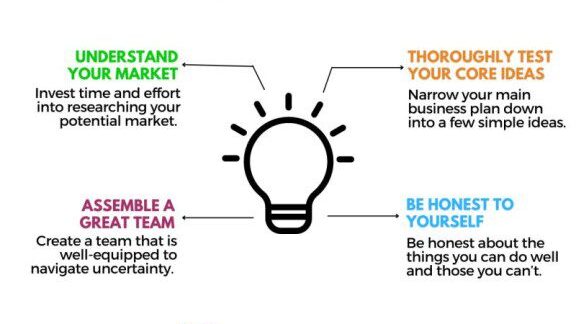
Startup strategy uncertainty has reshaped hiring decisions. Founders are favoring smaller, more versatile teams over rapid headcount growth. Generalists who can adapt across roles are valued more than specialists tied to a single function.
Remote and contract-based hiring has also increased, giving startups flexibility without long-term commitments. According to data from LinkedIn, job postings emphasizing flexibility and adaptability grew significantly during periods of heightened global uncertainty.
Fundraising Under Startup Strategy Uncertainty

Raising capital looks very different in an uncertain world. Startup strategy uncertainty has shifted investor expectations toward capital efficiency, realistic projections, and clear paths to profitability.
Founders now spend more time explaining risk management than upside alone. Investors want to see how a startup survives downturns, not just how it performs in ideal conditions. This has led to longer fundraising cycles and more conservative valuations, particularly for early-stage companies.
Resilience Is the New Competitive Advantage
In an uncertain global environment, resilience has become a strategic asset. Startup strategy uncertainty rewards companies that can absorb shocks and recover quickly. This includes diversified revenue streams, strong cash management, and the ability to pivot without losing core identity.
Founders who build resilience into their startup strategy are better positioned not only to survive uncertainty but to take advantage of opportunities when competitors falter.

What Founders Can Do Next
Startup strategy uncertainty is unlikely to disappear. Founders must design companies that expect disruption rather than fear it. This means embracing flexibility, investing in strong decision-making processes, and continuously reassessing assumptions.
Clear communication with teams and investors is also critical. Transparency builds trust during uncertain periods and helps align expectations when plans change.
Conclusion
Startup strategy uncertainty is reshaping how companies are built across the world. Founders can no longer rely on stability, but they can rely on adaptability. Those who accept uncertainty as a permanent condition rather than a temporary phase will build stronger, more resilient businesses.
In a volatile global economy, the most successful startups will not be the fastest-growing ones, but the ones best designed to endure change.
Frequently Asked Questions
What is startup strategy uncertainty?
Startup strategy uncertainty refers to operating without stable assumptions due to global, economic, or market instability.
Why does global uncertainty affect startups more than large companies?
Startups have fewer resources, less margin for error, and greater dependence on external funding.
How should founders plan during uncertain times?
By focusing on short-term execution cycles, flexible strategies, and scenario-based planning.
Does uncertainty slow innovation in startups?
Not necessarily. It often forces faster learning and more efficient experimentation.
What is the biggest advantage during startup strategy uncertainty?
Resilience, adaptability, and strong decision-making frameworks.